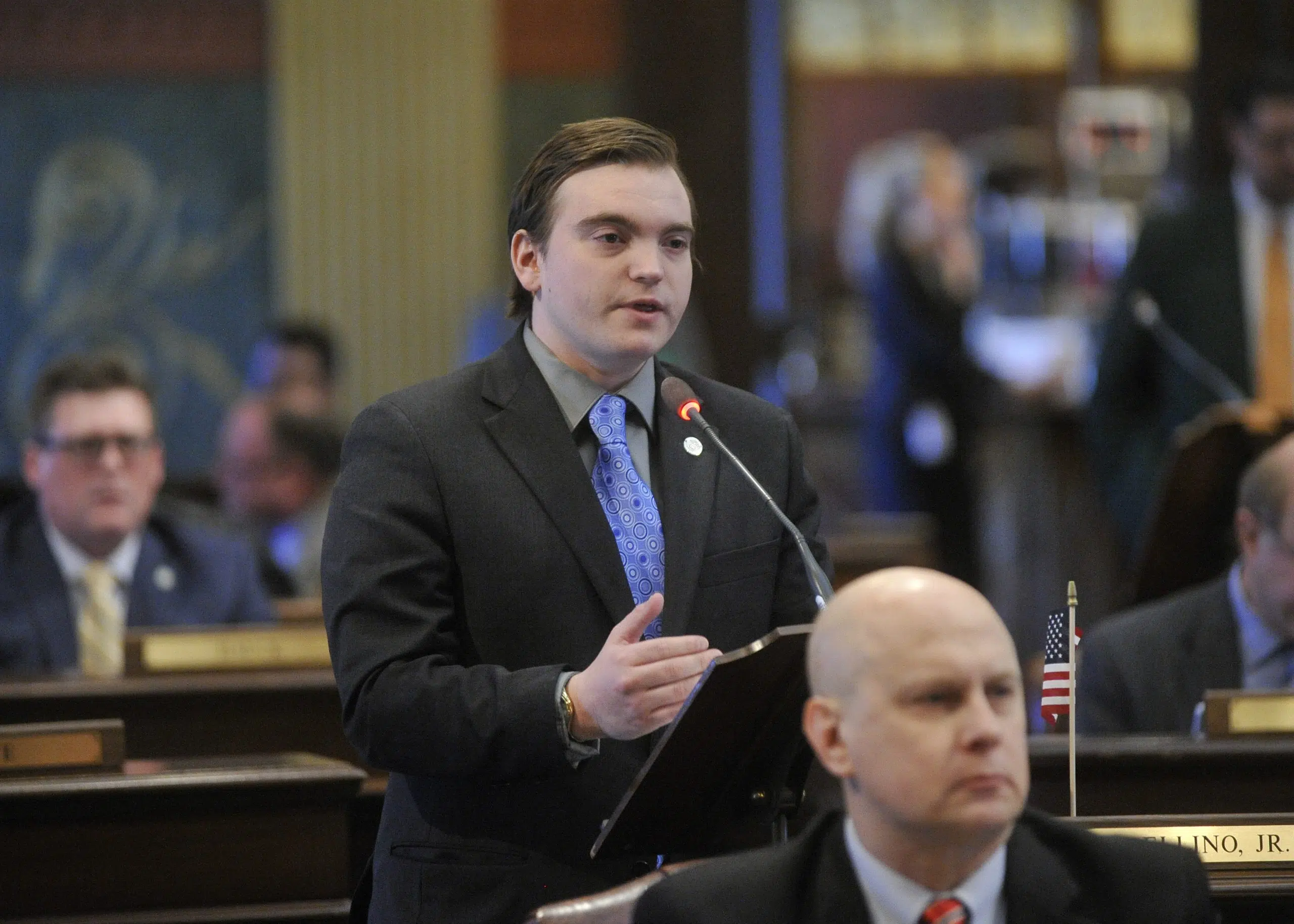
State Rep. Beau LaFave today voted in favor of a plan to complete three separate Delta County construction projects as part of wide-ranging legislation advancing through the Michigan House.
LaFave helped secure funds to establish the Rapid River Falls campground and renovate the A. Gene Gazlay Visitor Center at Fayette Historic State Park to be handicap-accessible.
The plan allocates $85,000 to build a local campground, which will serve as a 25-site semi-modern campground focused on serving off-road vehicles and ATV enthusiasts at Delta County’s Rapid River Falls Park. The campground will be the first of its kind in the Upper Peninsula and act as a trailhead for regional DNR trail routes with connectivity to miles of scenic riding opportunities across the U.P.
“Believe it or not, we actually have a summer in the Upper Peninsula, attracting thousands of tourists throughout Michigan and beyond to enjoy what our area has to offer,” said LaFave, of Iron Mountain. “When completed, this project will provide Delta County with a new attraction to boost tourism and supply our area with new jobs. I look forward to seeing the campground upon its completion.”
Delta County will also see an additional $50,000 to update existing infrastructure hazards at the A. Gene Gazlay Visitor Center at Fayette Historic State Park, and install handicap-accessible ramps to comply with Americans with Disability Act requirements. The visitor center tells the story of the abandoned iron smelting town.
“Everyone should have the opportunity to enjoy the beauty our state parks spoil us with,” LaFave said. “Visitors at Fayette Historic State Park support our local businesses and economy, and we are taking the proper steps in this plan to make some much-needed renovations to the center.”
The city of Escanaba will receive $300,000 to construct a non-motorized pathway along U.S. Highway 2. The North City Limits Pathway will connect Escanaba to the adjacent communities of Wells, Escanaba Township and the city of Gladstone. The project is also supported by a grant program through the Michigan Department of Transportation.
“This is all about enabling pedestrians to safely traverse the city,” LaFave said. “The North City Limits Pathway will help make our community more walkable, connecting residents to key parts of the area.”
The full plan includes $26 million for 34 recreational development projects and 30 acquisition projects statewide. The project investments outlined in the proposal were recommended by the Natural Resources Trust Fund Board in December. Recommendations are subject to approval by the Michigan Legislature, a process recently started within the House Appropriations Committee.
Money in the Natural Resources Trust Fund comes from the development of minerals on state land and is designated on an annual basis in partnership with local governments.
House Bill 4244 advances to the Senate for further consideration.