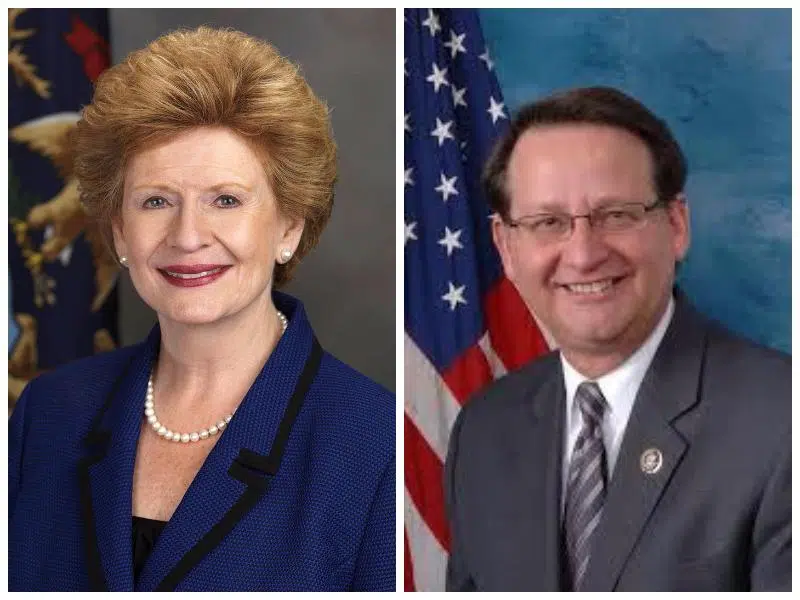
U.S. Senator Debbie Stabenow (D-MI) secured important priorities for Michigan in the final 2021 National Defense Authorization Act, which passed the Senate by a margin of 84-13. The bill now heads to the President’s desk to be signed.
“This bill continues to make important investments for Michigan manufacturers and secures a well-earned pay raise for our troops,” said Senator Stabenow. “It also strengthens our Buy American laws, ensuring that we use taxpayer dollars to support Michigan manufacturers, workers, and our defense industry. This will also help build the U.S. strategic national stockpile of personal protective equipment to support those on the frontlines of the COVID-19 crisis. The President should sign this bill immediately.”
Senator Stabenow secured important provisions in the 2021 National Defense Authorization Act to support Michigan, including:
- Guaranteeing a 3 percent pay raise for our men and women in uniform.
- Strengthening Buy American laws to support Michigan manufacturers. This bill will address loopholes in our Buy American laws to encourage the Department of Defense to purchase domestic products instead of foreign products. The Department of Defense will be required to provide an annual report to Congress on the use of waivers to bypass the Buy American Act and the Berry Amendment, which requires the Department to purchase food, clothing, fabrics, and hand or measuring tools from U.S. manufacturers. This requirement will provide more accountability and transparency around foreign purchases made by the Department of Defense. The provision also calls on the Department of Defense to provide quarterly briefings to Congress on areas where domestic industry cannot adequately support the Department of Defense’s missions.
- Addressing PFAS contamination. This bill authorizes $15 million in funding to continue a health study on the impacts of PFAS exposure, which is critical to establishing stronger federal standards for PFAS. The bill also protects Michigan farmers by requiring the Defense Department to alert them if their irrigation water is contaminated.
- Investing in ongoing research initiatives at the Ground Vehicle Systems Center (GVSC). The bill authorizes $42.5 million in funding for defense research projects at GVSC in Warren.
- Prohibiting the retirement of the A-10 Warthog at Selfridge Air National Guard base.
The U.S. Senate Friday approved the final national defense bill that includes provisions U.S. Senator Gary Peters (MI) authored and supported to benefit servicemembers and their families, support Michigan’s defense sector and strengthen our national security. It includes a pay raise for our men and women in uniform and Peters-led provisions to strengthen the medical supply chain and increase support for missile defense. The National Defense Authorization Act, which sets policy for the Department of Defense (DoD), is now headed to the President’s desk.
On Tuesday, President Trump issued a formal veto threat of the national defense bill. Peters has stressed the importance of this annual bill that garners strong, bipartisan support and been signed into law for 59 consecutive years. He is reiterating his call for the President not to veto this bill that’s critical to our national security and servicemembers over an unrelated issue.
“Now that the Senate has passed this important bipartisan legislation, it is critical that the President does not delay in ensuring that key resources are provided to Michiganders currently aiding frontline Coronavirus response efforts and serving in uniform across the globe,” said Senator Peters, a former Lieutenant Commander in the U.S. Navy Reserve and member of the Senate Armed Services Committee. “I was proud to help craft and negotiate this bill, and I hope it will soon be law — to give our servicemembers a pay raise, strengthen key alliances, bolster our medical supply chain and support cutting-edge defense manufacturers across Michigan.”
“The defense sector is a major part of Michigan’s economy, with over $6 Billion in defense contracts awarded to Michigan companies last year and over $24 Billion in economic activity from the defense industry,” said Vicki Selva, Executive Director of the Michigan Defense Center. “Senator Peters’ leadership on the Armed Services Committee is very beneficial to our state and we commend his work on this bill. These provisions will benefit Michigan’s defense assets, companies and those trying to expand into this sector.”
“Senator Peters’ provisions in this year’s NDAA are critical for Michigan servicemembers,” said Ret. Brigadier General Mark A. Montjar, U.S. Army, of South Lyon. “Whether it’s securing a raise for servicemembers – supporting Vietnam Veterans exposed to Agent Orange – or strengthening and modernizing JROTC programming across Michigan – this bill is important for all military personnel. We are fortunate to have Senator Peters as one of our US Senators supporting our troops.”
The following provisions Peters led or supported passed the Senate as part the final bill:
Supporting Our Troops and Their Families:
- A Pay Raise for Troops: This bill includes a 3% pay increase for all servicemembers that Peters supported.
- Promoting Youth STEM Education Programs in Michigan: This bill authorizes $15 million for STARBASE, a DOD Youth Program that promotes STEM education. Selfridge Air National Guard Base in Harrison Township is home to the first STARBASE program, which specifically provides K-12 students unique opportunities in experiential learning, simulations and experiments in aviation and space-related fields.
- Supporting JROTC STEM Programs: The bill includes a measure Peters supported to form a grant program for Junior ROTC organizations that focus on STEM education, including cybersecurity training.
- Providing Benefits to Vietnam Veterans Suffering from Illnesses Linked to Agent Orange Exposure: This bill includes a measure Peters coauthored to expand the Department of Veterans’ Affairs list of medical conditions associated with Agent Orange exposure to include Bladder Cancer, Hypothyroidism, and Parkinsonism. Tens of thousands of Vietnam veterans suffer from these three conditions due to their military service but have continuously been denied the care and benefits they have earned and deserve. Peters has led numerous efforts to end the wait for over 34,000 veterans currently suffering from those illnesses, as a result of direct exposure, who have been denied benefits and care.
Strengthening Our National Security:
- Protecting Our Medical Supply Chain: As Ranking Member of the Senate Homeland Security and Governmental Affairs Committee, Peters released a 2019 report identifying the national security risks of our country’s overreliance on foreign sources for critical medications and medical supplies – including adversaries like China. Peters authored language that was included to require the Secretary of Defense to assess the Department of Defense’s current pharmaceutical and medical device contracts and identify opportunities to invest in domestic advanced manufacturing capacity for these items.
- Bolstering Anti-Espionage Efforts: This bill contains a bipartisan amendment Peters co-authored to help universities protect critical defense research from espionage by our nation’s adversaries, including the Chinese government. The amendment would specifically require high-ranking officials at universities that conduct sensitive defense research to receive briefings on the espionage risk to those projects.
- Funding the Pacific Deterrence Initiative: This bill authorizes $2.2 billion that Peters helped secure for the Pacific Deterrence Initiative, which works to defend American interests in the Indo-Pacific region against aggression and coercion by the Chinese government.
- Strengthening the U.S.-Israeli Defense Partnership: This bill includes an amendment Peters sponsored to establish a working group between the United States and Israel focused on developing defense technology. This builds upon Peters’ bipartisan legislation to increase coordination on conducting research and developing technology to combat threats faced by both the United States and Israel.
- Ensuring Economic Stability During a Crisis: This bill includes a requirement for the President that Peters authored to create a plan for bolstering the economy during a major incident, such as a cyber-attack or pandemic.
- Increasing Coordination Among National Guard During Cyber-attacks: This bill includes an amendment Peters authored that would direct the Secretaries of the Army and Air Force to create a pilot program to enable the National Guard to remotely support other state guards and governments during cyber-attacks.
- Strengthening the Nation’s Artificial Intelligence Capabilities: As a founding member of the Senate’s bipartisan Artificial Intelligence Caucus, Peters authored provisions to bolster America’s artificial intelligence research, to build out artificial intelligence standards and provide new pathways to artificial intelligence jobs.
- Improving National Biodefense: This bill includes a provision Peters crafted to improve the National Biodefense Implementation Plan by requiring agencies to assume specific roles and responsibilities for protecting the country against a biological event, such as another pandemic, and establishing targets to measure their success in meeting goals and objectives.
- Reviewing Great Lakes Port Security: The bill additionally includes a Peters amendment requiring the Department of Homeland Security to review and report to Congress on Great Lakes and inland waterways seaports. The review would include scanning equipment on site or available to a seaport, staff by role, Customs and Border Protection expenses, and other information.
Investing in Michigan’s Defense Sector and Advanced Technology:
- Bolstering Missile Defense: The bill includes a requirement Peters supported for the DOD to study a layered approach to homeland missile defense. Peters offered an additional amendment requiring that study to include the possibility of locating any future missile defense sites at locations that have already been evaluated by the Department, including Fort Custer near Battle Creek.
- Cybersecurity Grants for Small Manufacturers: The bill contains an amendment Peters introduced to provide grants to Manufacturing Extension Partnership (MEP) Centers to be used to assist small manufacturers with meeting new federal cybersecurity standards — which are set to be phased-in as a requirement starting this year. Peters has previously worked to strengthen and cement the MEP program and the Michigan Manufacturing Technology Center (MMTC), which provides technical assistance to small manufacturers.
- Supporting Defense Research Initiatives at the Ground Vehicle Systems Center (GVSC): This bill authorizes $42.5 million that Peters supported for projects at the Ground Vehicle Systems Center in Warren that are focused on modeling and simulation, ground robotics capabilities, and virtual experimentation enhancement efforts.
- Prohibits the Retirement of the A-10 Warthog: This bill includes an amendment Peters cosponsored to prohibit retiring the A-10 in Fiscal Year 2021. The A-10 still plays an important role in counterterrorism and combat search and rescue missions, and the bill prohibits divesting of that aircraft in FY21 and requires the Air Force to provide a briefing to Congress on the future of the A-10. Selfridge Air National Guard Base hosts an A-10 fighter mission.
- Establishing a Quantum Research and Development Program: This bill includes a provision Peters authored to improve a research and development program for quantum computers, including developing a list of problems for which quantum computers are uniquely suited.
Other Provisions:
- Increasing Funding for CDC Study on Effects of PFAS Contaminated Drinking Water: The bill includes an amendment Peters helped introduce to increase funding for an ongoing Centers for Disease Control (CDC) study assessing human exposure to PFAS chemicals through drinking water by $5 million dollars, including ongoing work in Michigan. Peters helped establish the study in the national defense bill for FY 2018, which has been the first study to examine exposure to PFAS at multiple sites across the nation.
- Renaming Military Bases Currently Named After Confederates: The bill includes a provision Peters supported and that was approved unanimously by Democrats and Republicans in the Senate Armed Services Committee that instructs the DOD to remove names, symbols, or monuments that honor the Confederate States of America and those who served the Confederacy voluntarily from all Department of Defense installations.
- Improving Recruiting Efforts: The bill includes a provision Peters authored that instructs the Secretary of Defense to work with senior officials from the Departments of Agriculture, Education, Health and Human Services, and Justice to address issues that negatively impact military recruiting efforts.




















Comments