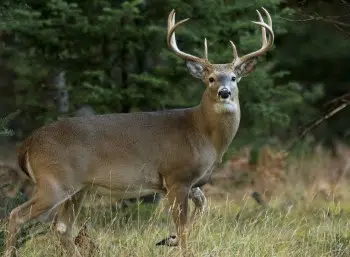
The Michigan Department of Natural Resources has awarded a total of $100,000 in deer habitat improvement grant funding to a dozen entities for projects in the Upper Peninsula.
The Deer Habitat Improvement Partnership Initiative is a competitive grant program designed to enhance deer habitat on non-state lands.
This year, 12 grants were awarded from 18 applicants for projects across 10 of the U.P.’s 15 counties. The value of the projects awarded grants totaled $201,541.
“These grants will produce positive impacts in Marquette, Alger, Delta, Dickinson, Iron, Baraga, Ontonagon, Gogebic, Schoolcraft and Mackinac counties,” said Bill Scullon, DNR field operations manager and administrator for the grant initiative. “The planned match for the 12 grants is valued in excess of $79,000 (well in excess of the required 25%) further expanding the impact of the projects.”
Primary goals for each of the projects include producing tangible deer habitat improvements, building long-term partnerships between the DNR and outside organizations and showcasing the project benefits to the public.
Scullon said the total amount of grant funding available is $100,000. The maximum amount of individual grants is $15,000 and the minimum is $2,000.
Now in its fifteenth year, the initiative is supported by the state’s Deer Range Improvement Program, which is funded by a portion of deer hunting license revenue.
Since the grant program’s inception, nearly $1 million has been made available to U.P. partners for more than 100 projects. The reach of the program has been hundreds of private landowners, over thousands of acres, involving all the region’s 15 counties.
This year’s winners are posted below:
1. Iron-Baraga Conservation District: The Iron-Baraga Conservation District has been awarded $10,000 for a project to partner with multiple landowners in Iron and Baraga Counties (Specific participating landowners/parcels to be determined through a selection process and identified at later date).
The intent of this project is to enhance deer wintering habitat across Keweenaw Bay Indian Community tribal, Forest Park School Forest and private lands in Iron and Baraga Counties. Brock Van Oss, the forester for Forest Park School District, is committed to planting all trees within the boundaries of the John Force Forest and other school forest property. Numerous private landowners who meet eligibility criteria will be able to buy various habitat option shares, actual landowner have not been identified yet. Private landowners will be able to implement and acquire separate shares of habitat options. Landowners will be provided with planting instructions. This proposal will utilize the planting of fruit trees, wildlife bushes and oaks as sources of hard and soft mast. Additionally, a wide variety of conifer species will be utilized to create cover habitat.
The habitat options included: a small-scale hard mast mixed habitat planting comprised of oaks and tree protectors along with a mixture of wildlife fruit and nut habitat seedlings; a small-scale mixed habitat planting variation for moist soil types comprised of hemlock plugs, cedar and tree protectors, along with a mixture of wildlife fruit and nut habitat seedlings; and a small-scale deer orchard comprised of standard size crabapple and apple trees with tree protectors along with a mixture of wildlife fruit and nut habitat seedlings. The conservation district plans a large-scale mixed planting of 1,720 hard mast, shrubs and conifers on KBIC lands. The district also plans a large-scale planting of 2,300 hard mast oaks, mixed wildlife shrubs and conifers on the Forest Park School Forest.
The Iron Baraga Conservation District is responsible for administering and implementing this grant proposal. Eligible landowners will be selected based on commitment to adhere to planting and maintenance protocols, number of contiguous acres in the parcel and regional deer management priorities as specified by the DNR. Landowner preference will be given to those with property within the deer-wintering areas in Iron and Baraga County.
The conservation district proposed a match of $11,350 (43%) for a total project valued at $26,350.
2. Straits Area Sportsmen’s Club: The Straits Area Sportsmen’s Club has been approved for $10,000 for a project to partner with the U.S. Forest Service’s St. Ignace Ranger District to brush wildlife openings in Mackinac County (T43N, R3W, Sections 29 and 30; T42N, R4W, Section 21; all lands are managed by the Forest Service). The intent of this project is to improve the suitability of the St. Martins deer wintering complexes in Mackinac County by mechanical (masticator) or hand brushing of wildlife openings to set back woody encroachment and improve cool season grasses as high-quality food sources for deer on the St Ignace Ranger District.
Wildlife openings are adjacent to deer wintering complexes and accessible to the public for hunting. Project proposals entail brush work to maintain old openings and alder strip cutting of six half-acre openings. In total, the club proposed 25 acres of work. Extra monies available after contract cost would be used to purchase soft mast fruiting shrubs on wildlife openings. The total project estimate is $51,388 with matching partnership dollars from the U.S. Forest Service ($26,400), Ruffed Grouse Society ($4,000) and Straits Area Sportsmen’s Club ($5,990). The total planned match is $36,388 (71%).
3. Marquette County Conservation District: The Marquette County Conservation District has been approved for a $14,870 grant to improve critical deer wintering habitat on three parcels within the county owned by Lyme Timber Company. One parcel had an overstory removal harvest three years ago, one is a young red pine plantation, and the third parcel received a hardwood thinning treatment two years ago.
The logging trails and roads left behind provide essential corridors for wildlife and will be enhanced by a wildlife seed on the trail and mast-bearing species of trees and shrubs to be planted throughout. About 5 acres will be treated in all. A Lake to Lake Cooperative Invasive Species Management Area crew will provide herbicide application and a pulling crew. Atlas Inspections & Contracting will perform site preparation with a bulldozer on existing logging roads/trails, along with creating some adjacent pushouts to widen areas. Non-invasive wildlife seed will be spread on trails and pushouts at a rate of 10 pounds/acre (mix will be designed for logging roads and includes a blend of 12 species of grasses and legumes including: orchard grass, rye grass, timothy, fowl bluegrass, black-eyed Susan and several species of clover).
Local volunteers will plant 200 hard and soft mast-producing trees and shrubs (100 white oak, 50 arrowwood and 50 serviceberry) along the edges of the trails and openings. These species were chosen due to their suitability to the soils on the parcels, as well as their ability to thrive in periods of climatic stress. Tree protectors will be installed around each seedling to ensure survivability against heavy browse. The contractor will return to the sites to place boulders to block motorized access to the trails to promote seed survivability. All parcels are owned by Lyme Timber Company and are enrolled in the Commercial Forest Program Act and are therefore open to public foot access for hunting and trapping purposes.
All properties are located between known deer wintering complexes and are used as deer migration routes, spring breakup foraging areas for deer, and feeding areas for deer. The naturalized seed, and the mast plantings will provide critical food and breakout wildlife openings as a sustainable food source. Signs detailing the project and funding sources will be installed at the parcel. MCCD proposes a match of $5,399 (26%) and the total project budget is $20,282.
4. U.P. Whitetails – Northwest Territory Project – Shawn Cannon Forestry: U.P. Whitetails Association Inc. and Shawn Cannon Forestry have been approved for a $3,157 grant for a spring break out wildlife openings enhancement project in Delta County (T42N, R22W, Section: 14. Lands are privately owned). There is little active agriculture and few managed openings in this area. The need for high quality browse is essential for wildlife within this area especially for deer traveling to and from yarding locations. The goal of this “Northwest Territory” project is to enhance summer and spring break conditions for wildlife on private land in Delta County adjacent to state-managed lands. The proposed project will include five different sites totaling 2.75 acres. This property has been under forest management for over 30 years. The “Northwest Territory” project will be disc, seeded and fertilized. The project will be implemented/seeded with a wildlife mixture
consisting of oats, white ladino clover, red clover, alfalfa and chicory.
The planting mix is a hardy seed type and provides an excellent source of protein. Chicory is a unique to inter-plant along with clovers as it has a long tap root system and holds strong during very hot, dry conditions during summer months. Oat’s main objective is to help nurse other planted seeds during their first growing season. The work will be completed by Shawn Cannon Forestry. While the planting sites are private land holdings, but they are adjacent to state lands. They propose a match of $1,052 (41%) for a total project valued at $4,209.
5. U.P. Whitetails – Watson Power Line Project – Shawn Cannon Forestry: U.P. Whitetails Association Inc. and Shawn Cannon Forestry have been approved for a $9,036 grant for a spring break out wildlife openings enhancement project in Marquette County (T42N, R26W, Section 10. Lands are privately owned). The goal of this project is to enhance summer and spring break conditions for wildlife. The proposed project will include one site totaling 8 acres. The “Watson Power Line” project will be disced, seeded and fertilized. The project will be seeded with a wildlife mixture consisting of oats, white ladino clover, red clover, alfalfa and chicory. These outbreak fields are a critical supplement, allowing deer higher nutritional browse when their resources have been depleted. Adjacent ownership surrounding this property consists of industrial private, open to public lands and state-managed properties. The work will be completed by Shawn Cannon Forestry. They propose a match of $3,012 (25%) for a total project valued at $12,048.
6. U.P. Whitetails – Wheeling Sportsmen Project – Shawn Cannon Forestry: U.P. Whitetails Association Inc. and Shawn Cannon Forestry have been approved for a $3,126 grant for a spring break out wildlife openings enhancement project in Delta County (T39N, R24W, Lands are privately owned). The goal of this project is to enhance summer and spring break conditions for wildlife. The proposed project will include one site totaling 3 acres. The “Wheeling’s Pasture” is an area that has been solely managed and hunted by the “Wheeling Sportsmen & Woman Program, for those with disabilities. The cooperating landowner has opened his property to allow this program to succeed on his property with a high demand in participation.
Ken Buchholtz of Wheeling Sportsmen’s organization has been the driving force behind this program and is always in need of help and volunteers to make this a reality. They proposed this project not to only to help better enhance wildlife habitat but give disabled outdoorsmen and woman a better opportunity to see game and pursue them. This project will be disced, seeded, and fertilized. The project will be seeded with a wildlife mixture consisting of oats, white ladino clover, red clover, alfalfa and chicory. Adjacent ownership surrounding this property consist of non- industrial private and non-industrial private “Commercial Forest Act” lands. The work will be completed by Shawn Cannon Forestry. They propose a match of $1,041 (25%) for a total project valued at $4,167.
7. U.P. Whitetails – Ottos Headquarters Project – Shawn Cannon Forestry: U.P. Whitetails Association Inc. and Shawn Cannon Forestry has been approved for a $5,059 grant for a spring break out wildlife openings enhancement project in Delta County (T42N, R21W, Sections:22, 27, and 28. Lands are privately owned). The goal of this project, which is known as the “Otto’s Headquarters” project, is to enhance summer and spring break out conditions for wildlife. The proposed project will include five different sites totaling 4.75 acres. This Whitefish River Basin area is one of the Upper Peninsula’s historic and prime deer yards.
The area provides cover for a high volume of deer, which some family groups identified as traveling upwards of over 50 miles to reach this yard. Outbreak areas within this yarding complex provide a nutritional boast to those deer traveling back to summer range and helps local deer build up their reserves faster. These properties have always been under forest and wildlife management and the owners are great stewards of the land. The project will be disced, seeded, and fertilizer.
The project will be seeded with a wildlife mixture consisting of oats, white ladino clover, red clover, alfalfa and chicory. Adjacent ownership surrounding this property consist of non-industrial private and Hiawatha National Forest lands. the work will be completed by Shawn Cannon Forestry. They propose a match of $1,686 (41%) for a total project valued at $6,745.
8. Gogebic Conservation District-Little Girls Point Deer Winter Complex: The Gogebic Conservation District has been awarded $13,636 for the Little Girl’s Point and Devils Creek/Chaney Lake Deer Wintering Complexes Spring Forage Enhancement project in Gogebic County. The conservation district is proposing to a two-part project with part one focusing on private landowner habitat shares for tree plantings with the second part targeting county forest partnership around Grouse Enhanced Management System sites and previous habitat improvements. Planting share Part 1: The conservation district will offer 15 planting shares composed of the following materials: 16 3-foot oak transplants, 34 1-foot fruit and nut shrubs, 16 5-foot tree tubes (with an expected 5+ year lifespan), 16 5-ft stakes and a project participant partnership sign. Planting instructions will be provided.
The second part of this project will involve providing high-quality deer forage adjacent to the Little Girl’s Point Deer Wintering Complex and Devils Creek/Chaney Lake Deer Wintering Complex in Gogebic County in an area where wildlife openings are scarce and may not offer suitable foraging opportunities for wintering deer. The proposed project will convert abandoned logging roads into food breakout areas in several places, in addition to mowing previously planted logging roads from previous seeding efforts to reduce competition from grasses and vegetation. This project will also encompass the Mosinee Grouse Enhanced Management System habitat areas.
Approximately 28 miles of old logging roads totaling 41 acres of habitat will be treated. Approved signs will be erected along public pathways to highlight the intention of the deer habitat improvement. The conservation district plans to partner with the Gogebic County Forestry and Parks Commission. The district will provide a match of $4,618 (25%). The total project is valued at $18,254.
9. Alger Conservation District: The Alger Conservation District has been awarded $14,000 to convert old logging roads into valuable deer forage areas in Alger County (Site 1, T47N, R22W, section 26; Site 2, T47N, R22W, section 26; T46N, R22W, section 21). The intent of this project with the Alger Conservation District is to partner with Lyme Timber Inc., Brian Bresette/Connie Lacko, and Delbert Storms at three project sites totaling 840 acres of ownership. Two parcels have management plans, the Strom property is Qualified Forest Plan enrolled, and Lyme is Commercia Forest Act land.
They plan to treat a large timber sale of 35 acres on Lyme Timber lands with an underplanting of oak and conifers in a harvest area treated previously for beech bark disease to restore hard mast. On the other two private properties, the conservation district plans to treat an extensive logging trail system that can be improved for spring break-up forage and for connectivity of the unique forest habitat that is critical to whitetail deer. They will use an excavating contractor to prepare by bulldozer/mechanical treatment (skid steer with mulching head) approximately 7 acres of linear trails, including a few small openings, old fields and log landings.
These areas would be then seeded with Deer Country Feed Mix at a rate of 25 pounds per acre. Additionally, the parcels will be treated with wildlife shrubs and plantings (with tree protection) to feather forest cover edges and provide additional hard and soft mast. Alger Conservation District staff will then plant hard and soft mast producing species along the edges of these trails, where appropriate, and in small pushouts, openings and past log landings.
Necessary protection will be provided and installed, such as tree tubes for smaller root stock and welded wire fence with T-posts for the larger fruit trees. Finally, the excavating contractor will revisit the sites to move and place boulders at two possible access sites to block off vehicular traffic to ensure survivability of the seed and eliminate any possibility of rutting or damage by vehicles. The native seed and the mast plantings will provide critical food and breakout wildlife openings as a sustainable food source. The list of species to be used will include, Dolgo crabapple, standard root stock apple varieties, wild plum, black cherry, chokecherry, white oak, northern red oak, American hazelnut, black elderberry, highbush cranberry, nannyberry, serviceberry and some coniferous species (white spruce, eastern white pine, balsam fir, and northern white cedar), where applicable, for future cover. The match from the district totals $4,601 (31%). The total project value is $19,457.
10.Schoolcraft Conservation District: Schoolcraft Conservation District has been awarded $6,616 for a project in Schoolcraft County. The intent of this project is to maintain 16 sites initially installed through Deer Habitat Improvement Program Initiative grants in 2017 and 2019. This maintenance work will consist of replacing dead or missing supplanted mast trees and shrubs; placement and/or maintenance/repair of fencing or other protective devices around each of those planted trees and shrubs and mowing of the sites in mid to late July. One of the sites will need multiple mowing’s to remedy encroaching species; watering the supplanted trees and shrubs at those sites if dry conditions indicate; possibly applying herbicide as needed to control competing vegetation around those trees and shrubs; taking soil samples and obtaining soil tests of those samples for sites and making fertilizer applications to the sites as indicated by those soil tests – at least for those sites not tested within the past three years. The conservation district match is 3,566 (25%) and the total project is valued at $14,263.
11.Camp Josh of Ontonagon County: Camp Josh has been awarded $7,500 for a hunter food plot maintenance project in Ontonagon County (Haight Twp, T48N, R39W, sec 4, NENW, 46). Camp Josh has a mission to provide outdoor recreation for people who are disabled, including underprivileged youth and disabled veterans in the Ontonagon area. They have a 3.5-acre food plot they are seeking to treat. They plan to mechanically treat, pick rocks, herbicide, soil test, amend the soils accordingly, plow, till and plant ladino clover and winter rye cover crop. They will use local volunteer labor for the project. They intend to use the area for hosting hunts during the liberty and youth hunt for underprivileged local sixth graders and disabled vets. Camp Josh plans a match of $5,250 (25%). The total project value is $20,198.
12.UP Whitetails of Dickinson County: U.P. Whitetails of Dickinson County has been awarded $3,000 to plant 100 white oak saplings with tubes and stakes on five private landowner parcels, each with a minimum 40 acres. Selection is to be determined based on advertisement. The goal is to increase hard mast. Additionally, 10 local U.P. Whitetails board members will each receive four Dunston chestnut saplings with protectors. Board members are selected to allow for intensive care/ monitoring to assess potential for broader use of chestnuts in the area. The project will be over seen by a professional forester with the conservation district doing the planning of chestnuts themselves. The agency proposes a match of $1,050 (25%), with a total project valued at $4,180.




















Comments