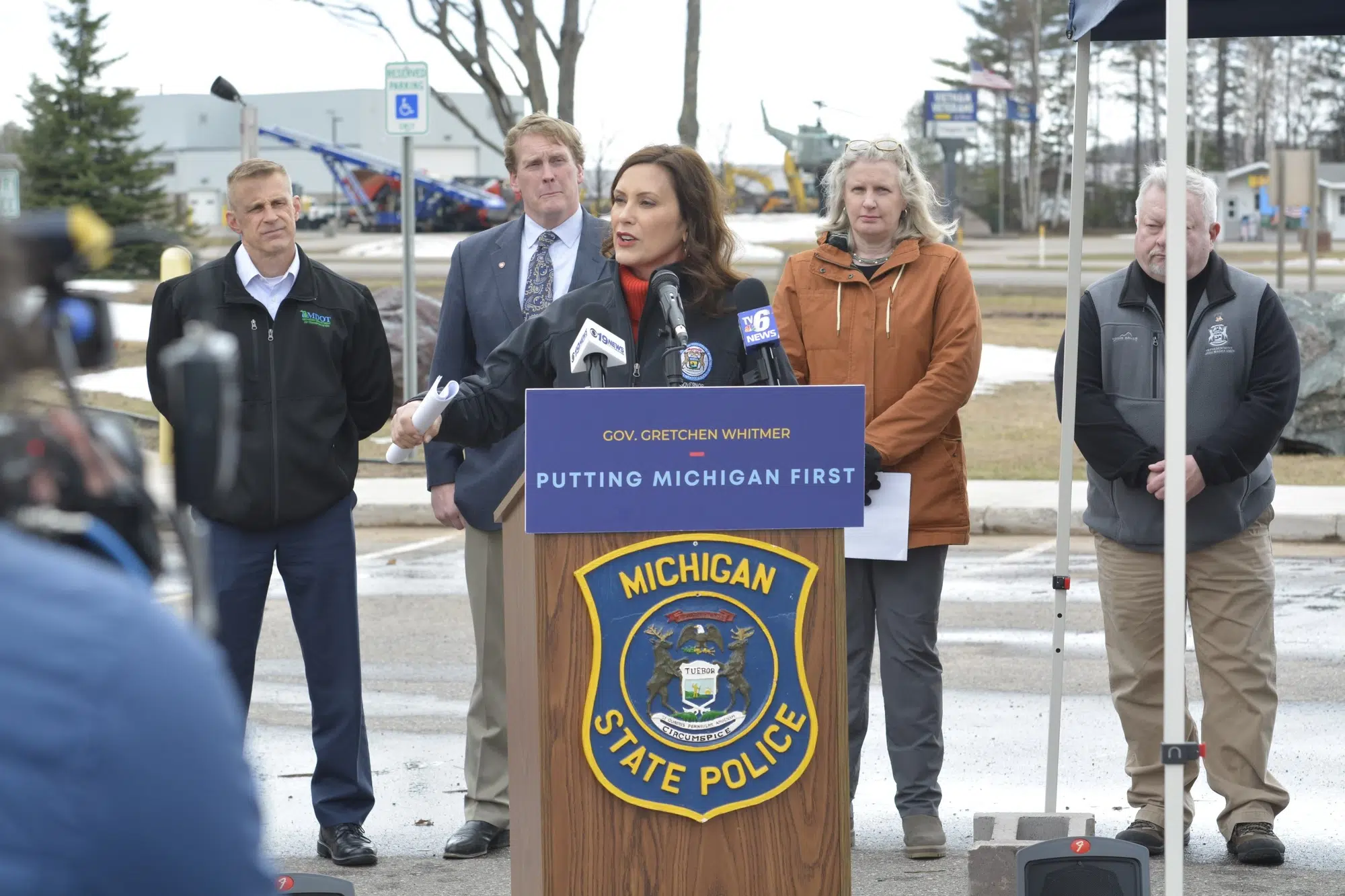
Governor Gretchen Whitmer joined local officials to give an update on the number of illegal guns recovered under Operation Safe Neighborhoods to keep communities safe. Since the operation began, law enforcement officials have conducted nearly 3,400 check-ins with felony offenders, leading to 389 illegal guns taken out of communities. During sweeps, officers have also recovered illegal drugs and ammunition.
“As a former prosecutor, protecting public safety is a top priority,” said Governor Whitmer. “By getting nearly 400 illegal firearms out of the hands of criminals before they can be used in the commission of a crime, we are taking action to keep families and communities safe. Earlier this year, I signed legislation establishing universal background checks and safe storage requirements, and I will work with anyone to reduce gun violence.”
Operation Safe Neighborhoods is a statewide crackdown on crime aimed at reducing gun violence by getting illegal guns out of communities and out of the hands of people who cannot legally be in possession of a gun due to prior criminal history.
“Our field agents are critical in our efforts to create a safer Michigan for all residents and our great partnership with law enforcement agencies across the state helps us daily in that effort,” said Heidi Washington, director of the Michigan Department of Corrections. “Targeting our intelligence efforts in this focused way is generating real results that are taking guns off the streets, which leads to safer communities and fewer victims.”
Nearly one in three reported violent crimes in Michigan involve a firearm. This initiative builds on Governor Whitmer’s MI Safe Communities program that she launched in 2021 to invest in local police, get illegal guns out of communities, and fund expanded opportunities in jobs, education, and the justice system.
MDOC parole and probation agents teamed up with local law enforcement across the state and have been conducting enhanced compliance checks on probationers and parolees who are legally prohibited from possessing a firearm.
There are roughly 32,000 probationers and 8,500 parolees in the state, of which 20 percent have been convicted previously of a gun crime. These individuals are supervised by more than 1,000 MDOC parole and probation agents. The plan the department devised and implemented is aimed at the strategic targeting of high-risk individuals who have weapons possession in their criminal history that could be used to commit further crime.






















Comments