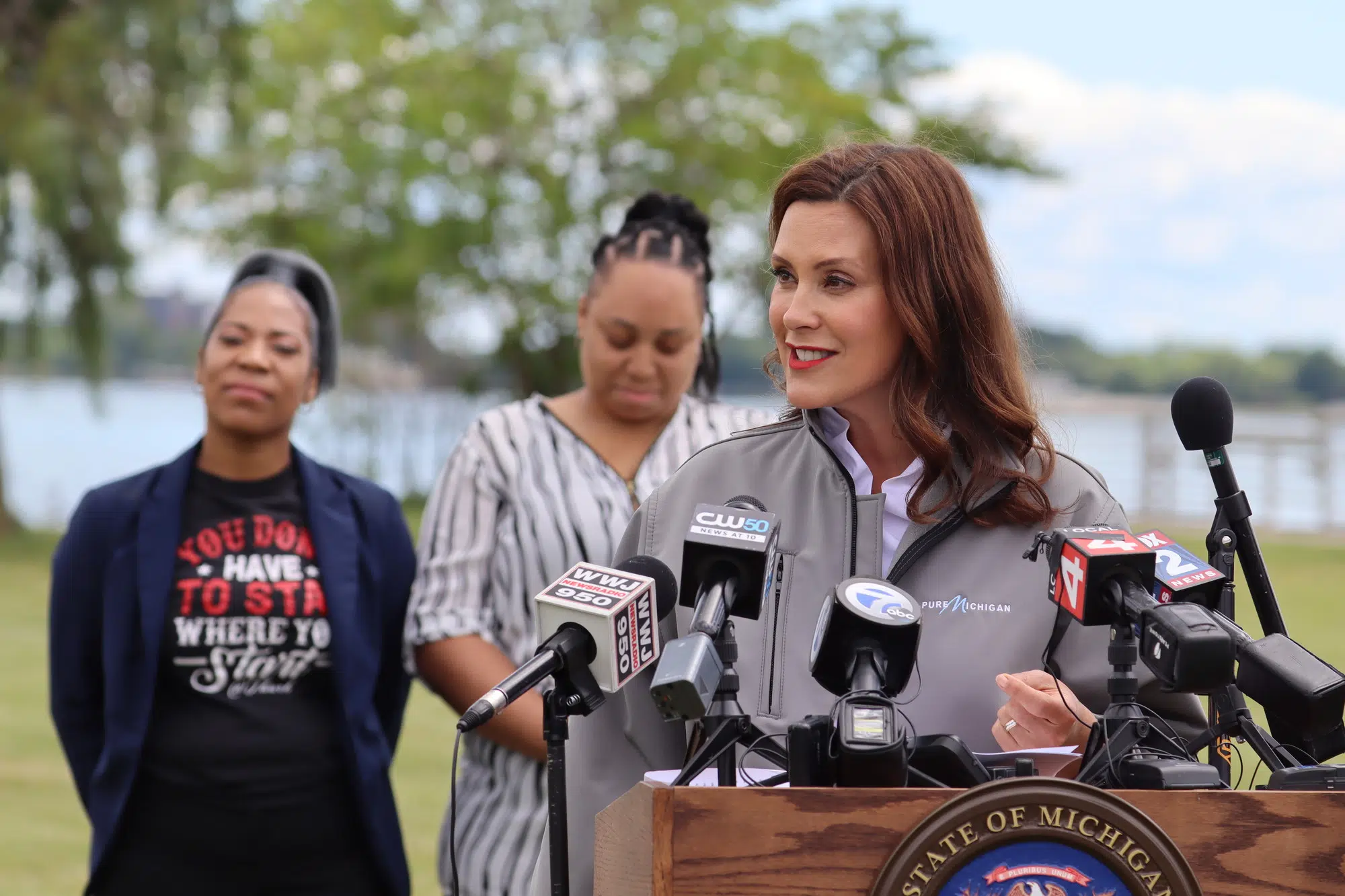
Governor Gretchen Whitmer signed a package of bipartisan legislation expanding voting rights. The bills implement Ballot Proposal 22-2, also known as ‘Prop 2,’ which was passed overwhelmingly by Michiganders last November. The new laws make it easier to vote in a secure way, ensuring Michiganders can make their voices heard in every election.
“Voting is the cornerstone of our system of government,” said Governor Whitmer. “Michiganders spoke with a clear, united voice last November when they voted overwhelmingly in favor of Proposal 2, expanding voting rights. Today, I am proud to sign bipartisan legislation implementing the will of the people, ensuring they can make their voices heard in every election. Let’s keep fighting to expand the constitutional right to vote freely, fairly, and securely with commonsense reforms so we can build a government of the people that delivers for the people.”
“This is what it means to have a government that works for the people,” said Secretary of State Jocelyn Benson. “Last November, Michiganders turned out in record numbers to expand our voting rights. Legislative leaders worked collaboratively with my office, local clerks, and voting rights advocates from around the state to make sure these bills provide the flexibility and resources we need to carry out the will of the voters. This was a thoughtful, bipartisan effort and I’m grateful to the leaders in both chambers for getting this done. We are ready to work with Michigan’s clerks to implement these new laws in time for next year’s elections.”
Senate Bill 339, sponsored by Senator Mallory McMorrow (D-Royal Oak), will establish a website for Michiganders to track their ballots. It will ensure voters are notified when their vote is received and counted and inform them if there are any errors and offer a solution to remedy them.
Senate Bill 367, sponsored by Senator Jeremy Moss (D-Southfield), requires at least nine days of early voting before each statewide and federal election so people can find a convenient time to vote that works for them without facing lines on Election Day. Also authorizes pre-processing and early tabulation of absentee ballots, ensuring a timely result after polls close on Election Day.
Senate Bill 370, sponsored by Senator Sylvia Santana (D-Detroit), implements requirements to allow voters to fix clerical errors with their ballots. It also requires prepaid postage for all absentee ballot applications and envelopes, saving voters time and trips to the Post Office.
Senate Bill 373, sponsored by Senator Stephanie Chang (D-Detroit), allows Michiganders to use their US passport, tribal photo ID card, military ID card, or student ID to identify themselves when they show up to vote. As has always been the case, they will need to be registered to vote in their precinct to cast a ballot. This law simply expands the valid forms of ID accepted to certify that you are who you say you are.
House Bill 4696, sponsored by Representative Penelope Tsernoglou (D-East Lansing), makes disclosing an election result from an early voting site before Election Day a Class E felony against Public Trust with a statutory maximum of five years’ imprisonment.
House Bill 4697, sponsored by Representative Matt Koleszar (D-Plymouth), requires at least one secure drop box for every municipality or at least one drop box for every 15,000 registered voters in municipalities with more than that many registered voters. These drop boxes will be used to return absentee ballots safely and securely and must be accessible 24 hours a day 40 days before an election and until 8 p.m. on Election Day.
House Bill 4699, sponsored by Representative Erin Byrnes (D-Dearborn), makes it so voters can fill out a single application to vote by mail and have a ballot mailed to them in all future elections without going through the hassle of extra paperwork, saving them time and money.
House Bill 4702, sponsored by Representative Penelope Tsernoglou (D-East Lansing), increases the maximum size of an election precinct from 2,999 active registered electors to 5,000, lowering costs for local governments.





















Comments