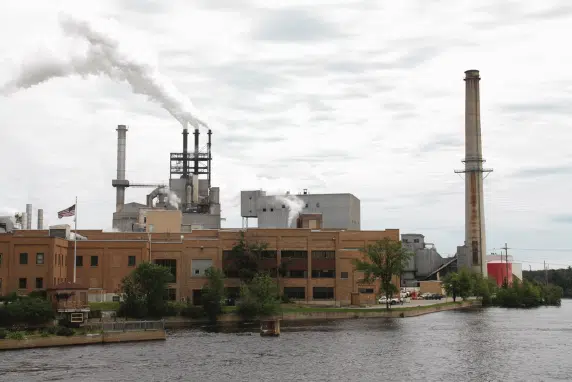
Public Health Delta & Menominee Counties (PHDM) continues to investigate an outbreak of blastomycosis associated with the Escanaba Billerud Paper Mill.
To date, there have been 14 confirmed cases of blastomycosis, a fungal infection, identified.
A confirmed case is a person with symptoms of blastomycosis and where the fungus has either been grown (culture) or seen by microscope in a specimen. An additional 39 people have been classified as probable cases. A probable case is a person with symptoms of blastomycosis and who has a positive antigen or antibody test.
At the request of Billerud, the National Institute for Occupational Safety & Health (NIOSH), an OSHA research agency, will perform a health hazard evaluation focused on studying the health and safety of Escanaba mill employees. A team of experts from NIOSH, the Centers for Disease Control and Prevention (CDC), the Michigan Department of Health and Human Services (MDHHS) and PHDM will perform a site visit to tour the mill and meet with members of management, the mill’s occupational health and safety team and union representatives. The evaluation is expected to continue after the onsite visit is complete, as the NIOSH team continues to analyze data and review case investigation information collected by PHDM.
Michael Snyder, Health Officer of PHDM said, “PHDM continues to interview cases identified by the healthcare providers. This information is being shared with MDHHS and NIOSH to aid in their health hazard evaluation.” These interviews assist in determining the approximate timeframe of when the exposure occurred, where the exposure occurred, and possibly how to prevent further exposures to additional individuals.
“The health and safety of our Escanaba employees remains our first priority,” said Brian Peterson, Operations Vice President, Billerud Escanaba Mill. “Though no causal link to our mill has been confirmed, we continue to take this matter very seriously. The addition of an independent review by NIOSH will deepen the investigation. We continue to work with OSHA, PHDM, and an industrial hygienist to determine common areas where affected employees have been. Across the facility, ventilation systems have been inspected, filters have been changed, and common areas have been deep cleaned.”
In addition to the onsite visits from NIOSH and the CDC, Billerud is providing OSHA-recommended N95 masks to all employees, contractors and visitors, along with information on how to properly wear the mask.
PHDM, Billerud and MDHHS continue to communicate daily regarding this investigation. “We will continue to closely communicate with local union leadership, state and local public health officials and our communities,” said Peterson.
Blastomycosis is a disease associated with a fungus that grows in moist soil and decomposing matter such as wood and leaves. People can get blastomycosis infection by breathing in fungal spores from the air. Blastomycosis does not spread from person to person or between animals and people.
Those who do get sick can develop symptoms such as cough (sometimes with blood), fever, chest pain, difficulty breathing, night sweats, fatigue, weight loss, muscle aches, and joint pain. Persons experiencing these symptoms should contact their healthcare provider and discuss whether testing for blastomycosis is recommended.
While there currently is not a vaccine available to prevent the illness, blastomycosis can be treated with antifungal medications prescribed by a medical provider. Treatment is most effective when started as soon as possible after diagnosis by a healthcare provider.
The following tips may reduce a person’s risk of exposure:
- Wear personal protective equipment (facemasks or respirators, eye protection, and gloves) when engaging in higher risk activities
- Only move leaf litter when it is dry
- Avoid moving or digging soil on windy days
- Cover soil and yard materials
- Ensure water has adequate drainage and doesn’t pool near work areas
- Install walkways over wet areas to prevent walking through and disturbing muddy soil
A specific source of the Blastomyces fungus causing this outbreak has not been identified. Because the fungus is common in the environment in the UP, identifying a specific source of exposure can be difficult. Health officials are making every effort to identify any exposures common among the ill individuals.
PHDM and Billerud will continue to provide updates about cases at the Escanaba Mill and the community at large. Please contact PHDM with any questions by calling: (906) 786-4111.
















Comments