CLICK TO HEAR JACK HALL’S INTERVIEW WITH SEN. ED MCBROOM (R-NORWAY)
CLICK TO HEAR JACK HALL’S INTERVIEW WITH REP. DAVE PRESTIN (R-CEDAR RIVER)
Upper Peninsula lawmakers are calling out the Michigan DNR for what they call an all-out war against pig farmers.
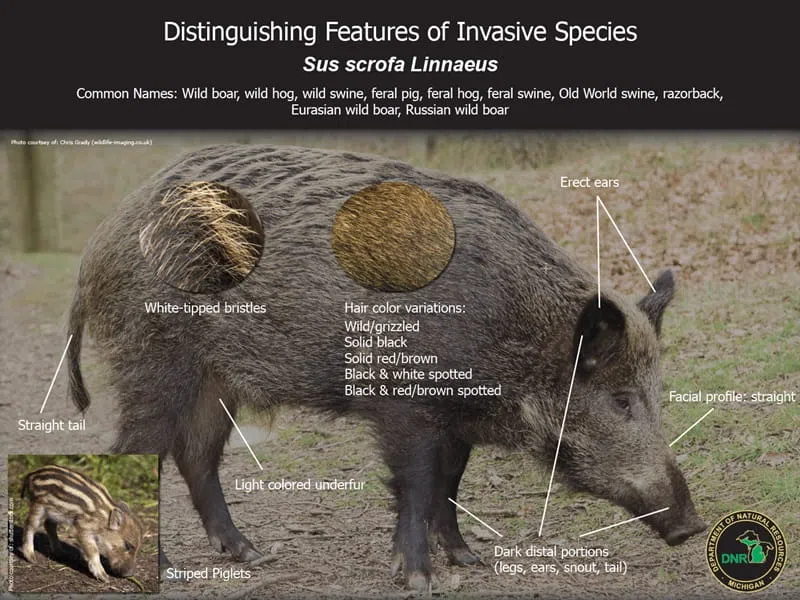
They’re highlighting the DNR’s Invasive Species Order, in place since 2012, that penalizes pig farmers and game ranch owners for “scary-looking pigs” that the agency claims might be an invasive Russian Boar. State representative Dave Prestin says these are NOT Russian male pigs.
“In actuality, it’s the Hogan Hog,” Prestin (R-Cedar River) told RRN News. “The Hogan Hog is a recognized breed, that’s raised by Roger Turunen up in Baraga. That’s the hog that most of the game (hunting) ranches in Michigan buy. At the end of the day, these hogs that are on game farms are agricultural-based. They are bred to look scary. Breeding can do a lot. That’s how you can get a chihuahua from a wolf. The DNR has been at war with Roger Turunen and the breeders since 2012.”
The DNR says that the Russian boar can be aggressive toward humans and can transmit several serious diseases. And they eat things that deer, bear, turkey, squirrel and waterfowl need. And the DNR says these pigs use their long snouts to look for food in the soil…and that causes soil erosion.
Upper Peninsula State Senator Ed McBroom (R-Norway) is not buying that argument.
“They continually claim that they’re doing this through science, but then they just use these visual characteristics,” McBroom told RRN News. “Oh, they might have pointy ears, but they might have floppy ears. They might have straight tails, but they might also be curly-tailed. It’s a whole bunch of nonsense that the courts said that they couldn’t do, but they stiill do it. He (Turunen) won in court that his pigs are legal, and that guys around Michigan can use their pigs. And yet the DNR continues to persecute him and these other ranches.”
McBroom also objects to some of the ways the DNR has gathered its information.
“They did an undercover sting where they pretended to be hunters and shot the pig and took the pig for testing someplace else,” McBroom said. “I think it should be under the Department of Agriculture. Because if you go to some of these places, they are just farms. They guys running them are farmers. So, it’s a frustrati0n to me that the Department of Natural Resources thinks that this is any of their business in the first place. I don’t think the DNR belongs regulating private property. It’s not their business.”
Nevertheless, the US Agriculture Department says that you can’t simply look at these pigs and say for sure that they are not invasive, as Prestin is claiming.
The USDA says that feral pigs can look like regular non-invasive pigs due to crossbreeding. Also, it should be noted that the Michigan Pork Producers Association supports the DNR order as a tool to help to protect their businesses from potential invasive boars.” Furthermore, the DNR and USDA both defend the effort to stop the disease that these pigs can spread, saying that the “feral swine population became a mix of Russian boars and escaped farm swine. Some of the current population may have escaped private hunting facilities, which are located in wooded areas adjacent to these farms.”
McBroom, himself a dairy farmer from Dickinson County, says he has no problem with making sure farms are safe. But he says driving people out of business is not the answer. Committee testimony included information that some farmers had been forced to slaughter all or majority of their pigs under order from the DNR if it was determined their pig breeds “looked” similar to what the department is labeling a “Russian boar”.
Both McBroom and Prestin say this is needlessly costing people their livelihoods, noting that there were once dozens of these farms in Michigan, and now, there’s only a handful. And their Upper Peninsula colleagues agree.
“This hearing was yet another example of the gigantic disconnect between bureaucracy in Lansing and our U.P. way of life,” said state Rep. Greg Markkanen (R-Hancock). “The DNR’s job is not to make laws. We must continue to protect people’s livelihoods and our state’s heritage of outdoor recreation.”
“I’m pleased to see the U.P. get a chance to tell its unique story of government overreach,” added state Rep. Karl Bohnak (R-Marquette), “The DNR is making our local pig farmers out to be a major threat when all they’re doing is making an honest living. We need a government focused on working for us, not going after us.”











Comments