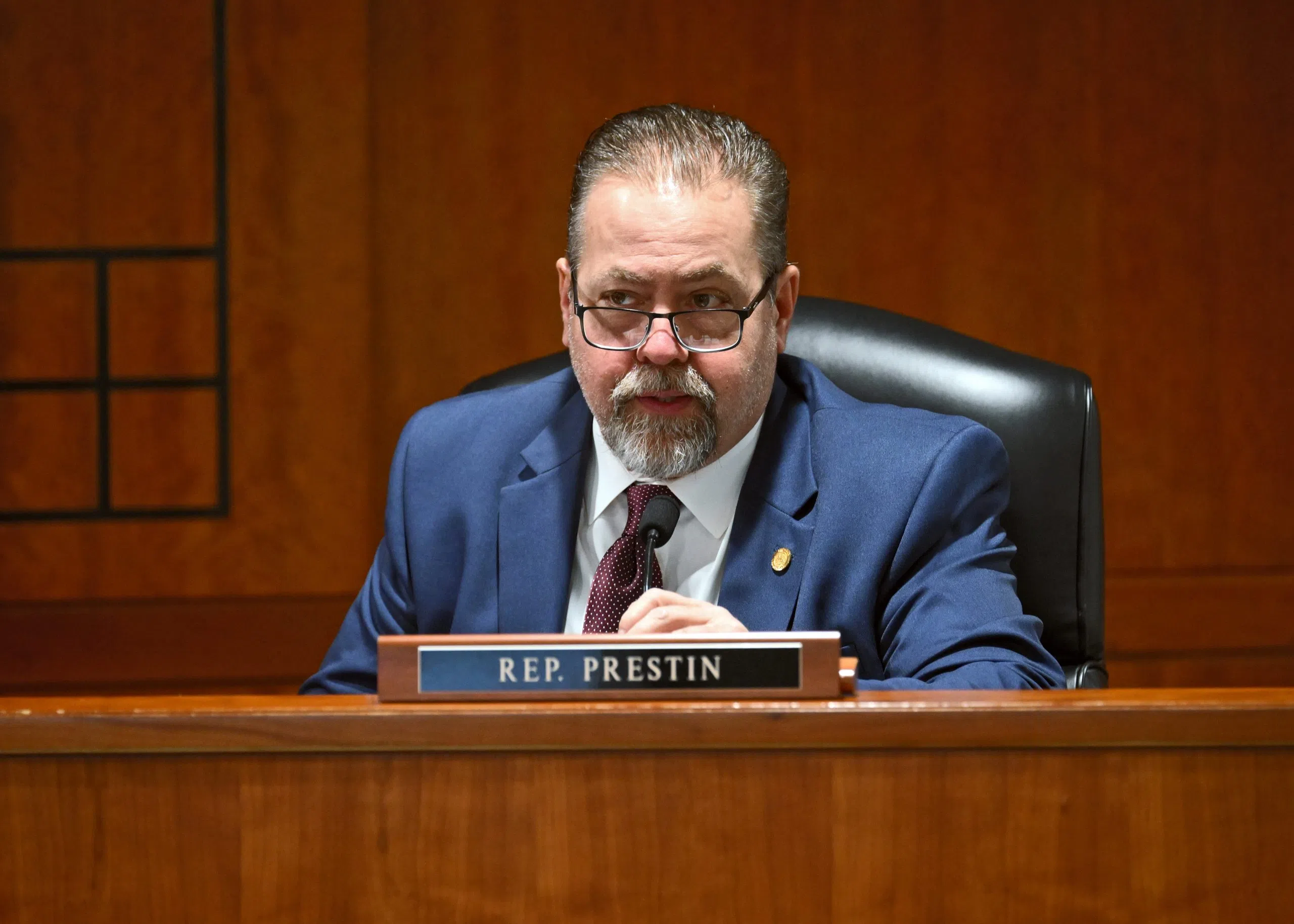
State Rep. Dave Prestin has introduced legislation to offer small, basic life-support ambulance services additional flexibility, leading to enhanced services for patients.
“This bill creates a path to secure flexibility that will allow rural providers to offer a level of service that is sorely lacking in many areas of our state, especially here in the Upper Peninsula,” said Prestin, who has served as a volunteer first responder, paramedic, and firefighter for the last 15 years. “There is only so much an ambulance operating at Basic Life Support can do for a patient while on the way to a hospital. I know how frustrating it can be for first responders trained in a higher level of care to know what to do in those situations but are withheld from even administering an I.V. due to state law.”
Under current law, Michigan requires all ambulance services to provide their level of care (Basic Life Support, Limited Advanced Life Support, or Advanced Life Support) on a 24-hour-a-day, 7-day-a-week basis. Unfortunately, this prevents small ambulance services from providing higher levels of care unless they can provide it on a 24/7 basis, even if the staff on the ambulance are trained to a higher standard.
“Emergency medicine is one of the fastest-paced, yet incredibly specific jobs a person can have,” said Prestin, R-Cedar River. “We’re talking about highly trained individuals operating with few resources in some of the most rural corners of our state. There are places where the state can take a step back and ask: Are the rules we have in place here really what makes the most sense for people with boots on the ground?’ If not? It’s our responsibility to update those laws wherever we can, and that’s exactly what I’m trying to accomplish here. No paramedic should be in a position where they could have saved a patient, but state law got in the way.”

















Comments