CLICK TO LISTEN TO AG DANA NESSEL COMMENTS ON LINE FIVE PIPELINE
In a one-two legal punch, Michigan Attorney General Dana Nessel not only responded to the Enbridge lawsuit filed against the state earlier this month, but simultaneously took the first step to decommission the 66-year-old dual pipelines that run through the Straits of Mackinac by filing a lawsuit in Ingham County Circuit Court.
The Attorney General filed her lawsuit the same day she filed a motion to dismiss Enbridge’s lawsuit filed in the Court of Claims on June 6 seeking to enforce agreements made in the last months of the Snyder administration that purported to authorize Enbridge to build a tunnel and continue operating Line 5.
“I have consistently stated that Enbridge’s pipelines in the Straits need to be shut down as soon as possible because they present an unacceptable risk to the Great Lakes,” said Nessel. “Governor Whitmer tried her best to reach an agreement that would remove the pipelines from the Straits on an expedited basis, but Enbridge walked away from negotiations and instead filed a lawsuit against the state. Once that occurred, there was no need for further delay.”
Nessel’s lawsuit asks the Ingham County Circuit Court to find that Enbridge’s continued operation of the Straits Pipelines under the easement granted by the State in 1953 violates the public trust doctrine, is a common law public nuisance, and violates the Michigan Environmental Protection Act because it is likely to cause pollution impairment and destruction of water and other natural resources.
The Attorney General’s lawsuit identifies a potential anchor strike as the most significant risk to Line 5. In 2017, the State’s contractor, Dynamic Risk Assessment Systems, Inc., identified an anchor strike as the most “dominant threat” to Line 5.
“The location of the pipelines – which carry millions of gallons of oil each day and lie exposed in open water at the bottom of the Straits – combines great ecological sensitivity with exceptional vulnerability to anchor strikes,” said Nessel. “This situation with Line 5 differs from other bodies of water where pipelines exist because the currents in the Straits of Mackinac are complex, variable, and remarkably fast and strong.”
Nessel also said: “The continued operation of Line 5 presents an extraordinary, unreasonable threat to the public because of the very real risk of further anchor strikes, the inherent risks of pipeline operations, and the foreseeable, catastrophic effects if an oil spill occurs at the Straits. We were extraordinarily lucky that we did not experience a complete rupture of Line 5 because, if we did, we would be cleaning up the Great Lakes and our shorelines for the rest of our lives, and the lives of our children as well.”
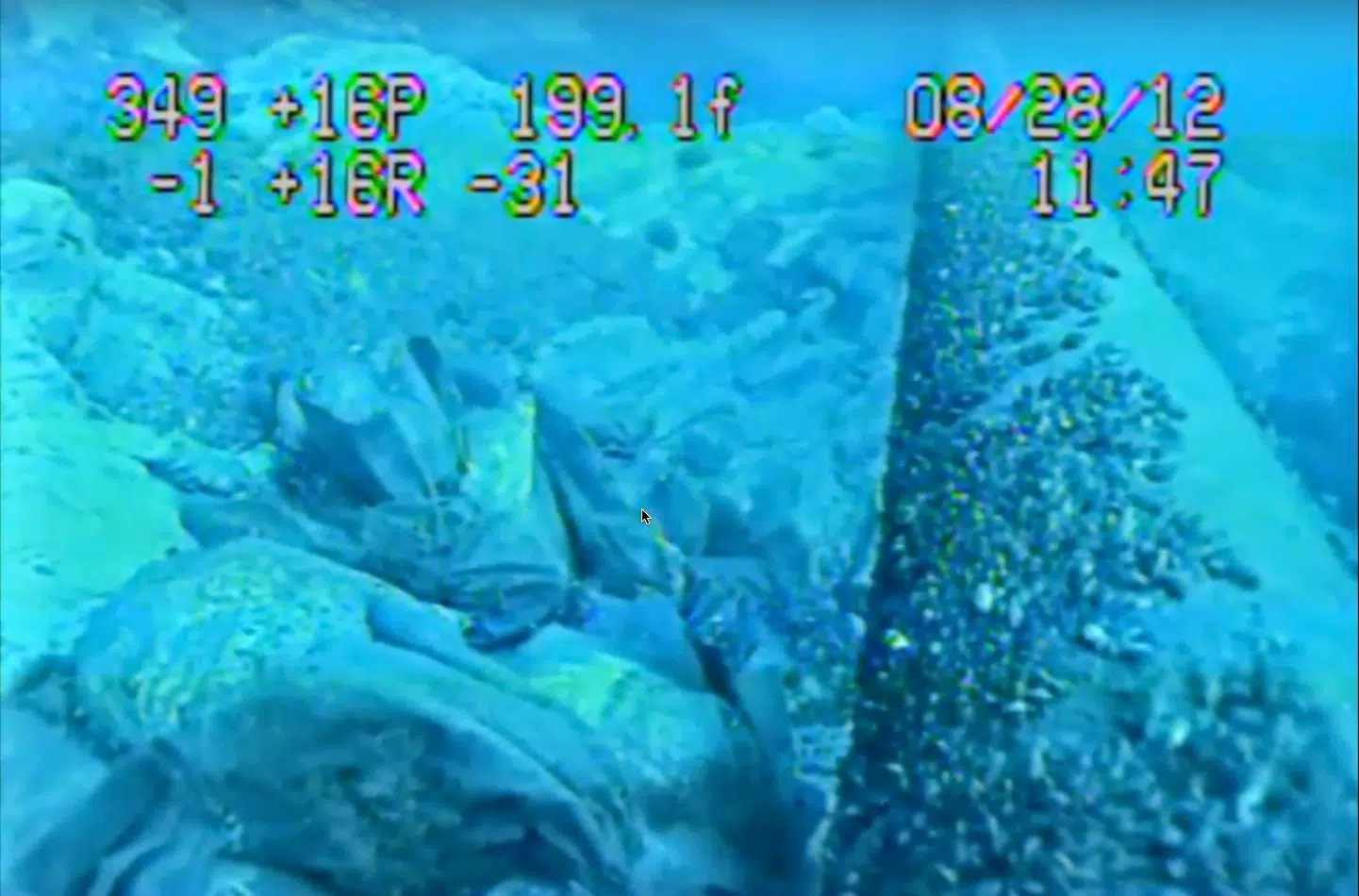
In fact, an April 2018 anchor dragging incident – which ripped through several inches-thick steel cables – brought that threat home in a very real way. Although Line 5 was damaged – not ruptured – in that incident because the anchor hit a section lying directly on the bottomlands, if the anchor had dragged across the bottom of the Straits in an area where Line 5 is elevated, the likely result would have been a complete rupture of Line 5.
Nessel’s lawsuit seeks an order from the Court to shut down and decommission the Straits pipelines as soon as possible after a reasonable notice period to allow orderly adjustments by affected parties.
The Attorney General also filed a motion for summary disposition in the Court of Claims today. That motion argues that PA 359 (2018), which would have created a new Straits Corridor Authority, is unconstitutional, and the agreements that purported to give Enbridge the right to build a tunnel and continue operating Line 5 in the Straits for the estimated seven to ten years it would take to build the tunnel are invalid.
This is consistent with Nessel’s first formal opinion as Attorney General determining that PA 359 – rammed through in a chaotic lame duck session at the end of the Snyder administration – was unconstitutional. Her office then notified all state agencies – including the Straits Corridor Authority – that PA 359 and any agreements relying on the statute, were unenforceable.
“The debate over Line 5 has been raging for over five years,” said Nessel. “Real-world events have shown me we can’t wait another five to ten years for Enbridge to build a tunnel. We cannot prevent accidental or emergency anchor deployments in one of the busiest shipping channels in the Great Lakes. And it only takes one such incident to cause an environmental and economic catastrophe. That is a risk no one should be willing to take.”
Ttiffany Brown, Press Secretary for Governor Whitmer, issued the following statement commenting on today’s legal filings regarding Line 5:
“The governor’s primary goal has always been and remains to get the Line 5 dual pipelines out of the Straits of Mackinac as soon as possible. The risk of a catastrophic oil spill in the Great Lakes, and the harm that would follow to Michigan’s economy, tourism, and our way of life, is far too great to allow the pipelines to continue to operate indefinitely. As a recent National Transportation Safety Board report documented, any doubt as to the risk posed by Line 5 was erased in April 2018 when a barge dragging a 12,000-pound anchor nearly caused disaster.
“The governor has never viewed litigation as the best solution to this problem, and for this reason she entered negotiations with Enbridge about the possible construction of a tunnel. Her reasonable requirement has been that the dual pipelines through the Straits cease operation at a date certain, after allowing for a period of transition. Enbridge, however, has insisted that it be allowed to run oil through the Great Lakes indefinitely. Rather than negotiating, Enbridge walked away and filed a lawsuit. Today, Governor Whitmer filed her response asking the court to dismiss Enbridge’s lawsuit.
“For several months the attorney general has indicated she would use her independent authority to seek to shut down the dual pipelines through the Straits if Enbridge did not reach an acceptable agreement with the governor. Today, the attorney general followed through on her promise by filing a separate action.
“Although the governor remains willing to talk with Enbridge, her commitment to stopping the flow of oil through the Great Lakes as soon as possible – and Enbridge’s decision to sue the governor rather than negotiate – will at some point require her to take legal action, as well. For that reason, today the governor has directed the Department of Natural Resources to begin a comprehensive review of Enbridge’s compliance with the 1953 Easement, and other factors affecting its validity. The 1953 Easement created the terms and conditions under which Enbridge could operate the dual pipelines on the bottomlands of the Great Lakes. Possible violations of the easement are just one of several grounds by which the state could seek to shut down the pipelines, some of which the attorney general has already invoked today.”