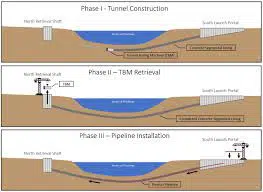
Today, the Michigan Department of Natural Resources issued a permit for the Great Lakes Tunnel project, intended to house a proposed replacement for the existing 73-year-old Line 5 dual pipelines currently located on the lakebed in the Straits of Mackinac.
The DNR issued a permit needed for the tunnel project under Part 365 of the Natural Resources and Environmental Protection Act. The permit requires several measures by Enbridge to reduce impacts on rare plants and animals.
The DNR evaluated the project’s effect on rare plants and animals and determined the tunnel project would adversely impact Houghton’s goldenrod and dwarf lake iris growing in the area, as well as several bat habitats. The plants impacted by this project are federally and state listed as threatened.
The DNR then engaged in two Tribal consultations and considered the Tribes’ research, expertise and concerns about the project.
The U.S. Fish & Wildlife Service considered the project impacts, because the species are federally protected, and concluded that the tunnel project would not jeopardize the continued existence of these species. After carefully weighing all the available data, the DNR agreed and concluded that the impacts at this site are unlikely to prevent the overall recovery of either plant species.
To lessen impacts on state listed plants and animals, the DNR developed a set of permit requirements. Specifically, the applicant must:
- Keep topsoil and collect seeds to be used to restore part of the Houghton’s goldenrod and dwarf lake iris populations after construction.
- Monitor the restored areas for at least five years to ensure healthy regrowth.
- Clear trees only during winter months to avoid disturbing bats.
- Take care throughout construction zones to avoid damaging sensitive plant areas.
- Keep surrounding vegetation as natural as possible and limit herbicide use.
- Consider long-term protection, such as a conservation easement, to protect surrounding rare plants.
- Explore additional opportunities to support recovery efforts for impacted rare plants.
The utility tunnel project requires several other permits, including from the Michigan Department of Environment, Great Lakes, and Energy, the Michigan Public Service Commission and the U.S. Army Corps of Engineers.
More information about the Great Lakes Tunnel Project, and related state actions, is available at Michigan.gov/Line5
















Comments